Zinc Strips vs. Soft Washing: What Actually Stops Roof Moss in Oregon?
Living in the moss capital of Oregon, Eugene homeowners constantly battle green carpets and thick pads on their asphalt shingle and tile roofs. One of the most common questions we receive is: “Do zinc strips really stop roof moss, or should I invest in professional chemical soft washing?” Here is the data-backed comparison.
How Zinc Strips Work on Oregon Rooflines
Zinc or copper strips installed along roof ridges rely on rainwater to wash microscopic zinc carbonate particles down the shingles. Because zinc is a natural fungistat, it creates a mild inhospitable zone for new moss spores.
- Effective Range: Rainwater only carries zinc protection approximately 4 to 8 feet down the roof slope before the concentration dissipates.
- Zero Impact on Existing Moss: Zinc strips cannot kill existing, established moss clumps or deep root structures anchored under shingle tabs.
- Heavy Rain Limitation: In Lane County’s torrential downpours, zinc ions wash away too quickly to maintain adequate sanitization on the lower two-thirds of the roof.
Why Professional Soft Washing Is the Gold Standard
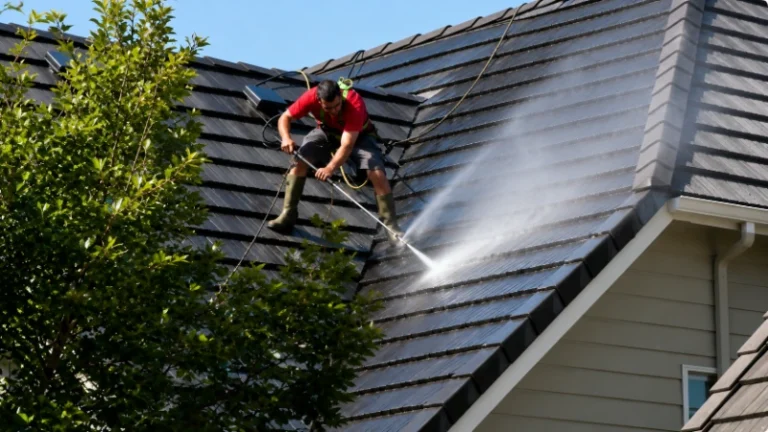
Unlike preventative strips, commercial soft washing delivers complete remediation:
- 100% Root Eradication: Targeted biocide treatments penetrate deep beneath shingle edges, neutralizing moss, lichen, and black gloeocapsa magma algae instantly.
- Granule Protection: Low-pressure application (under 100 PSI) cleans without dislodging shingle mineral granules or voiding GAF/Owens Corning roof warranties.
- 2-Year Clean Guarantee: A single professional treatment keeps roofs clean and compliant with insurance audits for 2 to 3 years.
The Winning Strategy for Eugene Homeowners
The optimal approach is to start with a professional soft wash to eliminate 100% of established moss and black algae streaks, followed by periodic maintenance treatments every 24–36 months to ensure lifetime roof longevity.
Similar Posts
Green Siding Cleaning: Eco-Friendly Soft Wash
Eugene homeowners are deeply committed to protecting the environment. From recycling to composting, sustainable living is a core local value. When it comes to home maintenance like siding cleaning, you shouldn’t have to choose between a clean home and a healthy ecosystem. Here is how our specialized residential green cleaning methods allow you to wash…
Student Rental Turnover Cleaning in Eugene OR: Landlord Exterior Guide
Managing student rental properties near the University of Oregon, South University, West University, and Fairmount requires rapid, reliable turnover maintenance every summer. High foot traffic, social gatherings, barbecue grease, and wet Oregon winters leave student housing exteriors stained with algae, grime, and oil spills. Here is how professional exterior cleaning streamlines property turnover and protects…
Home Insurance Roof Moss Warnings in Eugene, OR
If you own a home in Eugene, Oregon, you are likely no stranger to the moss that blankets lawns, trees, and unfortunately, roofs. In Lane County’s humid climate, moss thrives on asphalt shingles. However, this isn’t just a cosmetic annoyance – roof moss is increasingly triggering formal home insurance compliance warnings across the state. In…
Why Bleach-Free Cedar Cleaning Restores Eugene Decks Without Rotting Wood?
Why Bleach-Free Cedar Cleaning Restores Eugene Decks Without Rotting Wood? Bleach ruins cedar deck lignin, leading to wood splintering and gray weathering. We use sodium metasilicate wood wash to restore wood warm golden colors safely. Why Is Chlorine Bleach Dangerous for Pacific Northwest Cedar Decks? How Does Sodium Metasilicate Wood Wash Safely Restore Weathered Cedar?…
How Does Roof Moss Removal & Soft Washing Protect Your Eugene Home?
How Does Roof Moss Removal & Soft Washing Protect Your Eugene Home? Eugene’s climate promotes rapid shingle moss growth. We provide roof soft washing that kills moss biologically at the root level without abrasive shingle grit erosion. Why Does Roof Moss Spread So Aggressively in South Eugene and Cal Young? How Does Our Low-Pressure Soft…
What Is the Difference Between Pressure Washing and Soft Washing for Oregon Homes?
What Is the Difference Between Pressure Washing and Soft Washing for Oregon Homes? Pressure washing uses high-pressure water (1,500–4,000 PSI) for hard concrete surfaces, while soft washing uses low-pressure water (100–500 PSI) combined with biodegradable cleansers to kill organic growth on delicate shingles, wood, and siding. Why Is High-Pressure Washing Dangerous for Roofs and Wood…